

Truck driving is a profession that starts with the knowledge of acquiring the how to get cdl license in a compliant and practical manner.A commercial driver’s license (CDL) is not just a huge vehicle driving permit, but a credential to operate it as a professional with all the rules of safety, responsibility, and the chance to keep the job in the future. The median line between what is a driver of a trailer intended for over-the-road (OTR) driver, a regional operator, or a candidate to the special freight types, is the CDL where the application is based on the following federal and state mandates that a driver must meet — in other words, the real CDL requirements every applicant has to satisfy.
This step-by-step guide covers the CDL application process: how to apply, what are the eligibility requirements, what documents are needed, what training is to be taken, how to pass the test, and how to maintain your license. It also explains how CDL endorsements and restrictions influence your career choices once you start working.
Step 1: Find Out the CDL Eligibility Criteria
Before applying, you should be aware of the basic CDL eligibility requirements set by the Federal Motor Carrier Safety Administration (FMCSA) and your state’s DMV.
Common requirements include:
Minimum age
- 18 for intrastate driving
- 21 for interstate trucking
- Valid non-commercial driver’s license
- Legal residency or citizenship status
- Ability to read and understand English
- Clean or manageable driving record
Before any CDL documentation requirements or testing stages can be moved on, these must be met. Treat this stage as the foundation of your CDL requirements because any missing detail here can delay your timeline later.
Step 2: Complete the CDL Medical Examination
Every CDL applicant must clear a CDL medical examination that is carried out by a certified medical examiner that can be found on the FMCSA National Registry. This examination is the proof that you have the medical qualifications that meet the requirements for commercial driving.
The examination includes:
- Vision and hearing
- Blood pressure
- Cardiovascular health
- Neurological conditions
- Medication usage
If you pass, you will get a Medical Examiner’s Certificate, which you should include in your CDL documentation and it must remain current throughout your driving career as part of your long-term CDL license maintenance.
Step 3: Get a Commercial Learner’s Permit (CLP)
The subsequent step is getting the CLP application that permits you to learn how to drive a commercial car with someone else in the passenger seat.
To reach the CLP, you will need to:
- Present identification documents to prove your identity and residency
- Show your medical certificate
- Pass the relevant written knowledge tests
Before actual driving, the CLP is appropriate for 180 days.
Step 4: Finish ELDT Training
Starter federal laws mean that the vast majority of new drivers need to finish ELDT training (Entry-Level Driver Training) via accredited CDL training providers.
ELDT consists of:
- Theory (vehicle safety, compliance, operation)
- Practical outside training (private range and public road)
Program length will vary; typically, a CDL training course will take about 3 to 8 weeks for full-time students — this is the typical CDL training duration most beginners should plan around. You can be sure that your training will be correctly recorded in the federal systems by choosing from a verified CDL training providers list rather than an unregistered program.
CDL License Classes, Training Time, and Career Impact
| CDL Class | Typical Vehicle Type | Average CDL Training Duration | Common Endorsements | Career Impact |
| Class A | Tractor-trailers, combinations over 26,001 lbs | 4–8 weeks | Hazmat (H), Tanker (N), Doubles/Triples (T) | Access to OTR, regional, high-pay freight, owner-operator paths |
| Class B | Straight trucks, dump trucks, buses | 3–6 weeks | Passenger (P), School Bus (S) | Local and regional jobs, construction, municipal fleets |
| Class C | Small hazmat vehicles, passenger vans | 2–4 weeks | Hazmat (H), Passenger (P) | Niche routes, limited vehicle scope |
| Manual Transmission | Any vehicle tested with manual gearbox | Same as class | All endorsements available | No automatic restriction, broader job eligibility |
| Automatic Only | Vehicles with automatic transmission | Same as class | Endorsements allowed, but restricted | Limits job options due to CDL restrictions |
Step 5: Prepare for the CDL Skills Test
For many beginners, understanding how to get cdl licence correctly from the start reduces delays, failed attempts, and costly mistakes during the licensing process.As soon as the training is finished, you can set the date for the CDL skills test, which has three parts:
CDL Vehicle Inspection
Demonstrates how you are capable of examining the truck for safety and compliance.
Basic Control Skills
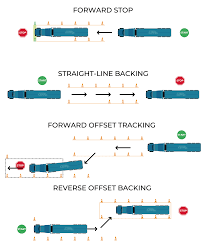
Concerns backing, parking, and maneuvering.
CDL Road Test
Evaluates your driving ability in real traffic.
Getting prepared with the CDL skills test is crucial, as failing in any part means you need to take the test again. This is exactly why focused CDL skills test preparation becomes one of the biggest separators between first-time pass and repeat attempts.
CDL Skills Test Common Mistakes and Remedies
Most often applicants do not fail the CDL skills test due to a shortage of driving skills but because of the easily removable faults related to stress, lack of structure, or incomplete preparation. Grasping the concept of underlying causes makes the first-attempt pass’ success drastically become high.
The longest tunnel is passing the CDL vehicle inspection, the first section. Drivers frequently point the components but fail to take the right inspection order or use terminology correctly. Examiners are assessing the candidates’ knowledge of safety and their rational way of thinking, not their speed. Omitting or hurriedly describing items may be a reason for failure, even though the vehicle is in great condition.
In the basic control skills part, the usual problems derive from disregarding the required precision. Boundary violations, extra pull-ups, or distance estimate failures happen when drivers train in a casual way rather than in a test-like environment. The power of structured repetition is at stake.
In the CDL road test, observation plays a crucial role. Neglecting mirror checks, improperly stopping, changing lanes, or indecisiveness at intersections add up quickly. Examiners must clearly see defensive driving and consistent control.
Winners are those who come to the assessment at peace, move slower, and regard the evaluation as a professional judgment rather than a battle. This approach is very close to the day-to-day rules of truck driving.
Step 6: Give the CDL Skills Test a Try and Get Your License Issued
Once you have gone through all the tests successfully, the CDL license can be issued by the state DMV. That is the moment when a specific license class and any endorsements and restrictions related to your CDL become official. In practice, this stage is the CDL license issuance process, and it is where your record is finalized with your class, privileges, and limits.
Typical endorsements include:
- Hazmat (H)
- Tanker (N)
- Doubles/Triples (T)
- Passenger (P)
The type of vehicle used and whether it had an automatic transmission during the test will be restrictions that are applied. These limits are known as CDL restrictions, and they can shape what jobs you qualify for. At the same time, your added permissions — your CDL endorsements — can expand your access to higher-paying lanes and specialized freight. In the real market, what matters is the combination: CDL endorsements and restrictions together determine your immediate hiring range.
Step 7: Take Care of and Extend Your CDL
CDLs are not eternal. It is essential to have your CDL renewed and maintained to be legally employable.
The necessary obligations are:
- Keep your medical certificates up to date
- Timely renew your CDL (usually between 4–8 years)
- Update endorsements whenever necessary
- Follow specific state rules of CDL renewal process
In addition, some businesses also support CDL continuing education which helps most to maintain high safety records and progress in their job. Over time, staying employable is tied directly to CDL license renewal, consistent CDL maintenance, and disciplined CDL license maintenance practices — not just safe driving.
The Choices That Will Affect Long-Term Truck Driving
In practice, knowing how to get cdl licence the right way helps drivers avoid unnecessary restrictions, choose better endorsements, and enter the trucking market with stronger career options.Learning how to get a CDL license is just the initial step. The distribution of your license structure, such as class, endorsements, and restrictions, is pivotal in your trucking career.
Drivers who get their licenses in stick-shift vehicles open up more than automatic drivers can. For example, Hazmat and Tanker endorsements are paid more but require you to be stricter in compliance and continuous documentation.
Medical requirements also shape the way things go. The drivers who take care of the CDL medical tests have a better chance and are less prone to disqualification of their licenses due to avoiding such incidents. In transportation, some of the minor driving mistakes are less damaging than the managerial errors.
The ongoing continuing education in CDL aids in the adaptation in response to the changes in the regulations, equipment, and safety standards. In many carriers, there are even informal CDL continuing education requirements inside safety programs, where training refreshers and policy updates become part of staying in good standing.
In trucking, those who view their CDL not as a temporary obligation but as part of their professional framework, generally enjoy greater success and flexibility.
Truck Driving as a Long-Term Profession
Getting into how to get a CDL license is just the initial thing. It also needs compliance with the CDL to ensure the medical renewals and license upkeep that directly affect the job openings, insurance costs, and income safety. Long-term stability is usually built on quiet discipline: consistent CDL maintenance, clean documentation, and staying ahead of CDL license renewal deadlines.
Drivers who deal with their CDLs as professional property — not just as something to get through — are more likely to achieve longer, more permanent trucking careers.
Closing Remarks
Getting a CDL license calls for more than just passing the exam. It requires adherence to federal regulations, regulated training, and continual compliance. Following a systematic path — from the CLP application, through the CDL license issuance process and renewal — one can build a strong foundation for success in truck driving.
The CDL is not just a license, but if you organize and carry out the process with discipline, it becomes a gateway to a professional trucking career.
Mini FAQ
How long does it take to get a CDL?
In most cases, the full process takes 4–8 weeks, depending on training format, test availability, and how quickly exams are passed.
Is CDL training mandatory?
For most new drivers, yes. Federal ELDT rules require training through approved providers before taking the CDL skills test.
Can I retake the CDL skills test if I fail?
Yes. You only retake the failed section, but multiple attempts can delay licensing and increase costs.
Do endorsements matter early in a trucking career?
Absolutely. The right endorsements expand job options and pay potential, while restrictions can limit hiring flexibility.