
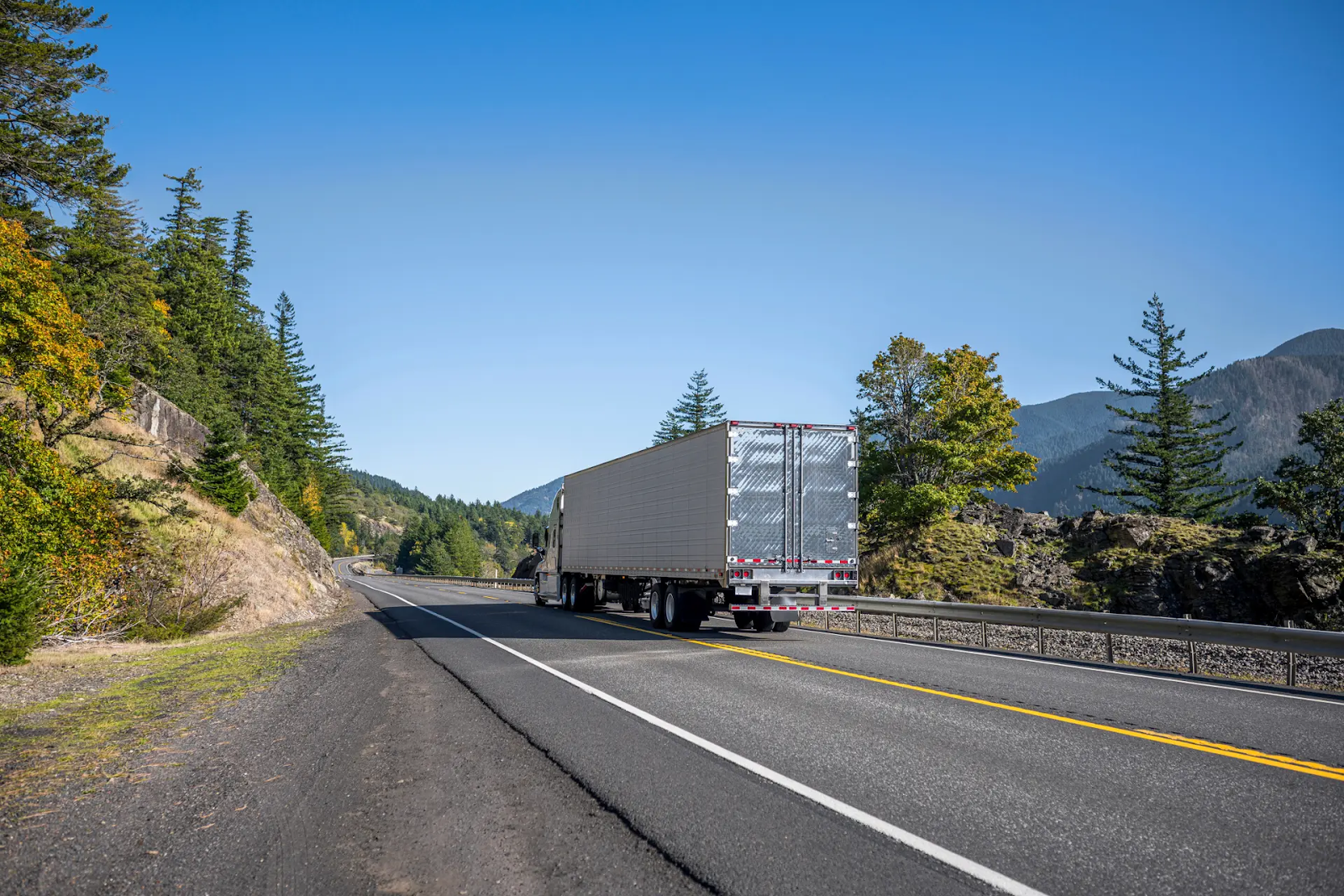
Understanding the speed limit for trucks is not just about compliance, but about how regulation directly shapes safety margins, routing decisions, and daily operational rhythm for professional drivers.The truck speed limits in the U.S. are quite different due to the different mechanisms they work under. Moving trucks are not as passenger cars due to additional pressure from state speed laws, federal guidelines, and exclusive safety provisions. Therefore, their transport efficiency, highway safety, and compliance risks are consequences of these differentiated aspects.
Regarding truck drivers, dispatchers, and fleet managers, the light of truck drivers; they see the rules regarding truck speed limits as implying memorisation of numbers but actually it is about understanding the way speed regulations decide routing, and delivery timing. The trucking industry which is the subject of discussion for speed limit trucks proposals for 2025 even more debates, is the one making these things resourceful.
The document discusses prevalent truck speed limits in the U.S., their reasons for differentiation, and the impact they have on the hauling of freight and the safety of roads.
🚚🛣️ Speed Limits for Truck Drivers: Navigating Safety and Efficiency
Differences between Truck and Car Speed Limits
Speed limits for trucks are set because commercial vehicles are different. The heavier weight, the longer breaking time, and the higher rollover risk means that trucks have more restrictions than cars on the highway.
The lawmakers in the state consider a number of aspects when establishing the truck speed limit to be as follows:
- Weight of the vehicle and braking ability
- Traffic volume and urban congestion
- Road construction and infrastructure quality
- Statistics on accidents involving trucks
This is the reason why in many states, the truck speed limit is lower than that of the passenger vehicle, particularly in urban areas or high-risk corridors.
State-By-State Truck Speed Limits: The System’s Operation
Every state has its own rules regarding truck speed limits, and this has led to substantial variations across the country. A driver can sometimes be legally allowed to speed in one state while the expected speed limit is lower in the neighboring state.
Interstate Speed Limits
While on highways, truck speed limits cover a range of:
- 55-65 mph in states with densely populated areas
- 70-75 mph in the non-metropolitan western states
Some states allow trucks to run at the same speed as cars, while others set a lower speed limit for commercial vehicles regardless of the traffic jam.
Urban Speed Limits
In cities, truck speed limits for the vehicle are usually much lower due to:
- High pedestrian and commuter traffic
- Shorter reaction times
- Increased collision severity
In the main business district, the urban speed limit for trucks may frequently decrease to 45–55 miles an hour, in spite of the fact that cars may have a higher allowed speed.
Rural Speed Limits
In turn, truck speed limits in the rural areas are usually found to be higher. More resources like wider roads, fewer intersections, and lower traffic congestions facilitate truck travel without it being considered harmful.The practical impact of the speed limit for trucks becomes especially visible when drivers cross state lines and encounter sudden regulatory shifts that affect traffic flow and scheduling.
Truck Speed Limit Supervision and Compliance
The management of truck speed limit enforcement is done at the state level by the following means:
- Traffic patrol watchers
- Weigh stations and inspections
- Telematics and logging data
Exceeding the truck speed limits can lead to penalties, CSA score consequences, and violation of insurance requirements. For fleets, repeated breaches can prompt investigations or excessive regulation on trucking.
The latest fleets are starting to use speed governors and telematics as a way to maintain the compliance of the truck speed limit, balancing safety with delivery expectations.
Safety, Freight Efficiency, and Operational Impact
The regulations on speed lay a weighty hand on both road safety measures and freight economics. From a planning perspective, changes to the speed limit for trucks influence freight efficiency, driver fatigue levels, and the balance between delivery speed and long-term safety.
With regard to safety it can be said that:
- Lower truck speeds reduce stopping distance considerably
- The severity of the accident is quite lower in the statistics
- The chances of flipping or jackknifing are minimized
In regard to the efficiency, it can be stated that:
- In reality, it is slower
- Truck driver planning is more complicated
- Hours-of-service restrictions are different
This complexity is the main issue under discussion in the current disputes about the truck speed limit policy and the influence of truck speed limits on the independent trucking companies.
The Proposal of the 2025 Truck Speed Limit: What’s New?
The truck speed limit 2025 riding high has brought back the debate to the front about the need for homogeneity in trucks driving across states. This notion is absent nationwide and brings together different truck-specifications under one federal rule yet the plan is dynamically evolving.
The proponents of the idea have put forth the following assertions as to what it may offer:
- Boost nationwide road safety
- Cut back on accident-related issues
- Elevate the compliance of interstate carriers
To which the opponent parties stress the opposite of that:
- Steam loss and freight efficiency
- Traffic jam in isolated mixed streams
- Homogeneous rules are blind to regional characteristics
Since they are not yet resolved, the theme has been driving on the agenda which is why truck drivers and freight carriers are supposed to keep their eyes open for the changes either way.
The Importance of Drivers Knowing Speed Limits
Drivers must understand that truck speed limits are diverse since they are different from each other. Such being the case, speed compliance greatly impacts:
- Driver safety records
- Company liability
- Long-term career stability
As drivers become seasoned, they exhibit high cognitive skills like proactive driving techniques which address speed skill but not ticket avoidance yet protect livelihood and CDL.
Truck Speed Limit Laws, Regulations, and State-Level Enforcement
The federal regulations on truck speed limits in the United States are basically market-driven by the different states and the general national highway rules. Road safety concerns and the implications of interstate trade are the main issues on which the federal agencies give direction, but the task of fix individually truck speed limits as well as monitoring them mainly lies with the states. It is this autonomy of states in truck speed limits setting that has led to the notable and variations of the state lines.
These truck regulations and trucking regulations are tied closely to highway regulations, shaping how truck speed limit laws are applied and enforced from state to state.
Every state comes with its own set of rules for the trucking industry that not only establish the maximum speed limits allowed but also the specific circumstances on the different routes such as interstates, urban, and rural roads free. For instance, in some areas the trucks are allowed to move at the same speed as passenger vehicles, while in others no matter the traffic situation they must comply with reduced limits for commercial vehicles. These speed limit laws are a cause of concern in different areas depending on the road conditions, average traffic volume, and the number of officers on duty.
In practice, truck speed limit standards and truck speed limit rules vary most noticeably on interstate speed limits, where different limits can apply to trucks versus passenger traffic.
Truck speed limit compliance is ensured through wheeling mechanisms involving different enforcement agencies. Highway patrol officers look for violations during roadside checks while weigh station and inspection officers check for general compliance to trucking laws. Increasingly, telematics and electronic logging systems play a role in identifying truck speed limit violations, especially for fleets having operations across several states.
The difference in the level of enforcement across regions leads to diverse effects that truck speed limits have. In the states where laws are more stringent, a single speed violation can have immediate consequences on the CSA score, which in turn affects higher insurance premiums or the need for corrective action plans to be followed. In other states, where enforcement tends to be situational, there are visible violations, but monitoring is not continuous.
It is imperative for drivers and fleet operators to familiarize themselves with the speed limit rules in truck at the local,state level. However, following the rules goes beyond being punished by fines only; it also has a direct impact on their safety records, operational credibility, as well as securing a stable long-term business in freight transportation.
Truck Speed Limit Variations and Their Impact on Freight Transportation
The measurable role of truck speed limit variations in the functioning of freight transportation across the United States is evident.
These truck speed limit differences are not just technical details — they change how fleets plan lanes, schedules, and driver pacing across the map.
The varying limits of speed result in the ruled route, the time it takes to deliver the products, the amount of fuel used, and the workload on the drivers. The little amendments in the rules and regulations on the truck speed limit can change everything in the logistics business, especially in the case of the time-sensitive freight that is much needed.
On interstate highways, the differences in the truck speed limits can cause an uneven flow of traffic. In the states where trucks have a speed cap less than that of passenger vehicles, the increase in speed disparities at times may, in turn, add to the risk of a collision and make the drivers more under stress. Conversely, in states that have higher speeds for trucks, they tend to have a smooth flow of traffic, but on the other hand, the need for road safety issues must be dealt with.
The truck speed limit impact shows up quickly in mixed traffic flow, lane-change pressure, and the real-world risk profile for professional drivers.
The urban speed limits are another layer to the puzzle. Slower truck speeds in cities are mainly the result of pedestrian protection and lessening of accident severity, but in addition, they bog down freight traffic in the key distribution areas. By contrast, the rural speed limits usually facilitate a reduction in congestion due to the fact that the trucks can haul faster, which in turn leads to the improving long-haul efficiency.
These changes in the laws basically turn out to be a foregone conclusion in terms of the effect on freight efficiency. Dispatchers must cater truck speed limit compliance when approximating arrival times, while drivers have to deal with the hours-of-service limits stricter in the slower roads. A part of the problem that the inconsistent speed settings build up is the driver fatigue example when repeat changes are must across state lines.
The trucking industry is still debating on the issue if a more riding vehicle adoption would mean greater overall efficiency. To be exact, those who claim that integrating standards would lessen confusion and promote compliance as well as those who emphasize that regional conditions make uniform rules impractical say both sides. Meanwhile, as in the case of truck speed limit novel updates, the necessity of knowing how speed variations affect freight movement still remains a big issue of operational skill to deal with.
Truck Speed Limit Updates, Policy Trends, and the 2025 Proposal
The topic of truck speed limits has been back in the spotlight lately especially as part of the conversation of the national policy changes, one of which is the proposal of 2025 truck speed limits. This drive aims to adopt more common standards on the truck speed limit across states, chiefly focusing on the interstate routes. Being at the review stage, it is a possible substantial transformation of the trucking sector’s regulations.
Among current speed limit proposals, the focus is increasingly on consistency across long-haul corridors rather than one-off local adjustments.
Proponents of the truck speed limit plan for 2025 believe that the common rules will not only enhance the road safety but will also make compliance easier and decrease commercial heavy vehicular accidents. From the perspective of the regulations, a single norm of truck speed on the road could make enforcement easier for interstate movers who travel through different jurisdictions.
The 2025 truck speed limit proposal is framed as a nationwide safety-and-compliance reset for interstate carriers, not a minor tweak.
Opposition, on the other hand, raises fear about the repercussions on freight efficiency and also operational flexibility peering in again. A crimp imposed by the government through a speed cap could unintentionally affect the long-distance carriers operating in the areas where the present limits are set at safety levels that are higher by agreement. There is also trepidation that warehouse turnaround time could worsen if the traffic is mixed with passenger vehicles that run at faster speeds during peak hours with the introduction of these common limits.
Discussion on the topic of truck speed limits has been touched on by innovation too. Speed governers, adaptive cruise-system, real-time telematics are some of the manufacturers starting to spread adherence strategies. These devices can assist speed limit compliance but at the same time, they also cause questions on the driver condition and the cost incurred by equipment.
Because truck speed limit updates often arrive through phased rulemaking and enforcement shifts, fleets track them the same way they track fuel and compliance risk.
As long as truck speed limit changes remain under discussion the importance of being well-informed not only for drivers but also for the entire fleet cannot be overemphasized. Policy changes are not always abrupt; however, regulatory fluctuations can rearrange the conditions of operation in the workplace over time. Evolving trucks’ speed limit norms, policy observation, and changeable practices will be among the core areas of professional truck driving.
Conclusion: Tacking Truck Speed Limits with Assurance
Truck speed limits in the U.S. represent a very delicate balance between safety, efficiency, and regulation. Being that state-specific speed limits are variable, truck requirements are shifting, and a constant discussion about policies is going on, it is a must for anybody involved in freight transport to be notified.
Recognizing the speed limit as a restriction is a no-no for professional drivers. Instead, they think of it as a part of the whole system that is formed to increase safety and at the same time enable freight to keep moving. Staying updated about speed limit policies is key as they constantly change with the times. Hence, flexibility and awareness are still essential driving skills in trucking today.
Frequently Asked Questions: Truck Speed Limits in the U.S.
Why do trucks tend to have lower speed limits compared to cars?
This is because trucks need long time to stop, are heavier during, they are more likely to turn over. Lowering speed limits helps to minimize the severity of accidents and increase the overall safety of highways especially in highly congested or risky areas.
Are truck speed limits the same when changing states?
No. Truck speed limits are determined at a state level, thus drivers may face different rules when driving through states even on the same interstate highway. Therefore, the knowledge of regulations related to specific states is crucial for the observance of the rules.
Are truck speed limits the same on interstates, urban roads, and rural highways?
No. Interstate speed limits are generally higher compared to urban roads which mostly are lower because of traffic congestion and the presence of pedestrians. Rural speed limits might be higher or lower because of road construction and local rules.
Who is responsible for truck speed limits enforcement?
The execution is through the state highway patrols, road site checks, weigh stations, and increasingly through telematics and electronic logging systems that fleets use to monitor compliance.
What are some of the effects that the 2025 truck speed limit proposal could have on drivers?
If enacted, the proposal could bring about uniformity in the speed limits across the interstate corridors, which would result in a major benefit in compliance as well as it might affect delivery timing, traffic flow, and operational flexibility for long-haul drivers.