

What can a truck driver do to stay awake and alert on a long-haul night shift at the wheel without putting his blood pressure and safety at risk? Yes, parking all those trucks and carrying out a really big box can be enticing, but not being able to recover from being awake during the day is a problem.
This question sits at the core of professional trucking, yet it is often answered too simply. How do truck drivers stay awake is not just a question of willpower, but a core issue of road safety and long-haul trucking performance.
Of course, willpower and toughness are the best traders. However, it is not the task of a guy to go against scientific laws that man is subject to. In fact, the road is not signing the weight of it alone but of the other drivers unable to perform at optimal on the road who is less at risk of accidents if the driver is not so fatigued too. Truck driver fatigue is one of the most underestimated risk factors in commercial trucking.
Therefore, respect the natural limits of your body and manage your sleep in such a way that you avoid driving fatigue. Then, apply tactics that are prearranged to ensure the well-being and top performance of the driver.
The truck driver job deals with the physical and mental expectations of the worker.
These demands include:
- long periods of sitting down
- abbreviated visual stimuli on a highway
- wrong schedules
- pressure of time of delivery
Long-haul trucking places unique demands on driver safety and sustained alertness.
Normally, fatigue does not come as a sudden attacker. It creeps in, biochemically blocking the keeper’s reaction time, visually blinding on the watchtower, and releasing thought errors long before the watchman feels sleep deprived.
The starting point of truck driver reasoning is the understanding that fatigue is a state with its own characteristics and how it manifests in a commercial vehicle operator.
Truck Driver Fatigue and Its Hidden Phase-Out Cycle
Driver fatigue very is usually referred to as a simple issue. In actual fact, however, fatigue is a stepwise descent into cognitive and physical performance precipitated by insufficient sleep, unendurable mental effort, or interference with natural sleep/wake cycles.
Recognizing early fatigue symptoms is essential for drowsy driving prevention.
For instance, a driver might be promoting the wakefulness and the brain might already be in a state of debilitation.
In long-distance trucking, the opposite decision-making, lane discipline, danger identification, and emotional regulation are consequences of shortage of rest. Most crashes, due to sleepiness, occurred not from drivers going out but because they had an unruly judgment instead.
Top 5 tips on how to stay alert as a truck driver while driving
Drowsy driving prevention depends on early self-awareness, not emergency reactions.
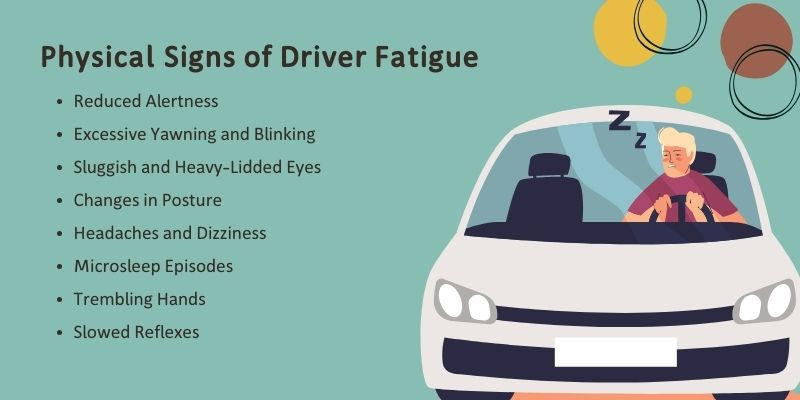
Fatigue may reveal itself through:
- constant yawning
- frequent blinking
- reacting to traffic signs slower
Sleep Hygiene and the Alert Driver
Quenching thirst and hunger, as well as curing fatigue, comes with proper management of sleep. The building block of the alert driver’s portfolio is proper sleep.
Sleep hygiene is the foundation of all alertness strategies for truck drivers.
For truck drivers more than the sleep quantity it is the sleep quality that is crucial. Noise, light, temperature, and stress can prevent deep, restorative rest even when hours are available.
Consistent sleep schedules, blackout curtains, ear protection, and minimizing screen use before sleep all contribute to better driver health and alertness.
SAFE-T Part 1: Sleep, Alertness and Fatigue Education for Truckers
Hydration, Nutrition, and Energy Stability

Burnout includes drivers under this nutrition plan. In the right nutrition scheme, drivers see an improvement in their driving behavior.
Hydration plays a direct role in maintaining focus, reaction time, and road safety.
For sure, the energy drink that they usually consume is not a complete replacement for water. Many drivers notice an increase in alertness simply by ensuring they consume enough water during their driving.
Nutrition is really the greater part of the decision-making process as a trucking operator realizes. Having high-fat meals full of oil increases the drowsiness.
Healthy snacks such as nuts, fruit, yogurt, and lean protein support stable alertness without energy crashes.
Choosing little and quantity well-balanced meals helps the body to maintain regular blood sugar levels.
Hydration and Nutrition Impact on Driver Alertness
| Factor | Effect on Alertness | Risk if Ignored |
| Proper hydration | Better concentration and reaction time | Headaches, reduced focus |
| Balanced meals | Stable energy levels | Blood sugar crashes |
| Healthy snacks | Sustained alertness | Sudden fatigue |
| Excessive heavy meals | Increased drowsiness | Slower decision-making |
Caffeine Management: Helpful but Limited

Caffeine is really the favorite project used to increase the stated degree of wakefulness, but it should be handled with care.
Caffeine management is part of alertness strategies, not a replacement for sleep.
The thing that caffeine does is not recover the alertness lost but it just also irritate fatigue.
Used for its potential purposes smartly, caffeine can augment vigilance. Yet, inappropriately used, it will quicken the breakdown.
Caffeine Use vs Driver Alertness
| Caffeine Use Pattern | Short-Term Effect | Long-Term Impact |
| Moderate, timed intake | Temporary alertness boost | Minimal disruption |
| Excessive consumption | Jitters, false alertness | Increased fatigue |
| Late consumption | Delayed sleep | Poor recovery |
| Used instead of sleep | Masked exhaustion | High safety risk |
Physical Exercise and Movement on the Road
What wakes up the brain is physical activity. A little bit of movement during your route break is enough to stimulate blood circulation.
Regular physical exercise during rest breaks supports driver safety and alertness.
Physical activity is a very good remedy for mental fog from prolonged sitting and the stiffness caused by this.
Mental Engagement Without Distraction
Engaging mental muscles can help to improve the alertness but in return, they must not distract from driving.
Balanced mental engagement improves focus while preserving road safety.
Creating a wheel of awareness is the target not excitement.
Driver Health and Chronic Fatigue
Chronic fatigue seems to be often related to some kind of illness, e.g. sleep apnea, obesity, or stress.
Driver health management directly impacts long-term alertness and safety performance.
Healthy drivers are effective in recovering faster from fatigue and thus they perform better during their driving lives.
Trucking Regulations and Fatigue Control
The regulations governing trucking are designed to reduce the risks of accidents due to driver’s fatigue by limiting the driving hours and requiring the driver to take breaks.
Trucking regulations support road safety, but they cannot replace personal fatigue awareness.
Drivers are the only people who have the authority to monitor their sleepiness level and make safety choices.
Listening to the Body: The Professional Skill
The drivers coping with tiredness that result from the push-through long work hours are more likely to have accidents.
Ignoring fatigue symptoms is one of the greatest threats to driver safety.
Being able to identify the time to stop driving is a strength for the professional, not for the weapon.
Personal Alertness System Construction
The best and safest truck drivers consider a lot of things about their alertness not just one method.
Effective alertness strategies work as a system, not as isolated tricks.
This system includes:
- sleep hygiene
- hydration
- nutrition
- rest breaks
- caffeine management
- movement
- early fatigue recognition
Conclusion

What is the mood of a truck driver driving safely and consistently? Able to listen to their fatigue and control it by not leaving it unattended. Understanding how do truck drivers stay awake begins with recognizing that sustainable alertness is the core of road safety in long-haul trucking. Being alert is not about being hardy or pushing through. It is rather about being prepared, being disciplined, and being self-aware.
Professional drivers do not fight fatigue — they manage it. They understand that alertness is a resource that must be protected, not spent recklessly. Every decision related to sleep, hydration, nutrition, rest breaks, and workload either preserves that resource or depletes it. This is the real answer to how do truck drivers stay awake over thousands of miles without sacrificing safety or health.
Long-term safety on the road is built not on extreme effort, but on stable routines and honest self-assessment. Drivers who respect their limits reduce accident risk, protect their health, and sustain consistent performance over time. Staying awake is not the goal — staying in control is.
In trucking, alertness is not a momentary state. It is a system.
FAQ
1. How truck drivers stay awake without depending on energy drinks very much?
The most reliable way that drivers ride on truck cases to stay awake is via managing fatigue before it has a chance to build up. Having enough sleep hygiene, eating healthy, drinking water, having a balanced diet, and taking allowed short breaks are key things that help you get a good alertness level, while energy drinks only temporarily hide fatigue and often bring about long-term exhaustion.
2. What are the initial signs of drivers’ dangerous fatigue?
Truck drivers’ fatigue is rarely a sudden occurrence. The first signs include slower reactions on traffic signs, frequent eyelid blinking, trouble keeping between the lane lines, and less situational awareness. Early recognition of these indicators is crucial for combating drowsy driving.
3. Is caffeine a safe solution for long-haul alertness?
Caffeine can promote a short-term alertness boost, but it is not a replacement for sleep. Bad caffeine management makes alertness feel like a lie, prolongs recovery, and increases safety risks, especially during night driving and long shifts.
4. How does hydration affect driver alertness and safety?
Hydration is a very good reaction time, concentration, and decision-making tool. A very small percentage of dehydration can bring the wrong alertness and fatigue symptoms, so it is good to drink a proper amount of water, which is one of the easiest and most effective ways to avoid these issues.
5. When should the trucker stop driving due to tiredness?
A professional truck driver should stop driving as soon as he/she/they observe symptoms of fatigue and not when they feel overwhelmed. Being the one to know when the margins of alertness are lost and choosing to rest is a core rule of safety and a fundamental factor in long-term driver health and road safety.