

Those venturing into the sector of the haulage and freight immediately realize that the trucker lingo is not the accouterment for livening the things up only, or a charming, old-fashioned thing. It is, instead, a practical requisite of trucker communication, grounded in long-standing trucker culture. Whether you thread through a desert, maneuver a cityscape, or climb over a mountain range, the CB radio is the device that a driver can never really part with. The short and fragmented messages that you send over the air carry more transparency and speed than any notification on your application. The invention of trucker slang — a language out of necessity, combining with the unwritten traffic codes of council and needs — once every driver speaks it one way or another, independent of their choice.
Mastering the trucker lingo is what helps a driver to keep abreast with the road hazards, severe weather conditions, police activities, local detours, and other facts that his GPS is unable to inform him in a timely manner. A trucker is an expert in using a unique set of trucker terms. It is like a rolling shorthand that with the help of thread, the drivers will be able to sew a nice picture. Once you manage to decipher this code and link the trucker lingo meanings together, it feels as if the road is narrating to you through hundreds of small trucker slang words that circulate daily across the highways.
Video Tips on YouTube
The Ultimate Guide to Trucker CB Radio Lingo 10 Codes, Slang, and Road Culture in 4K
Why Trucker Slang Lingo Still Matters Even When We Are in a Digital Era
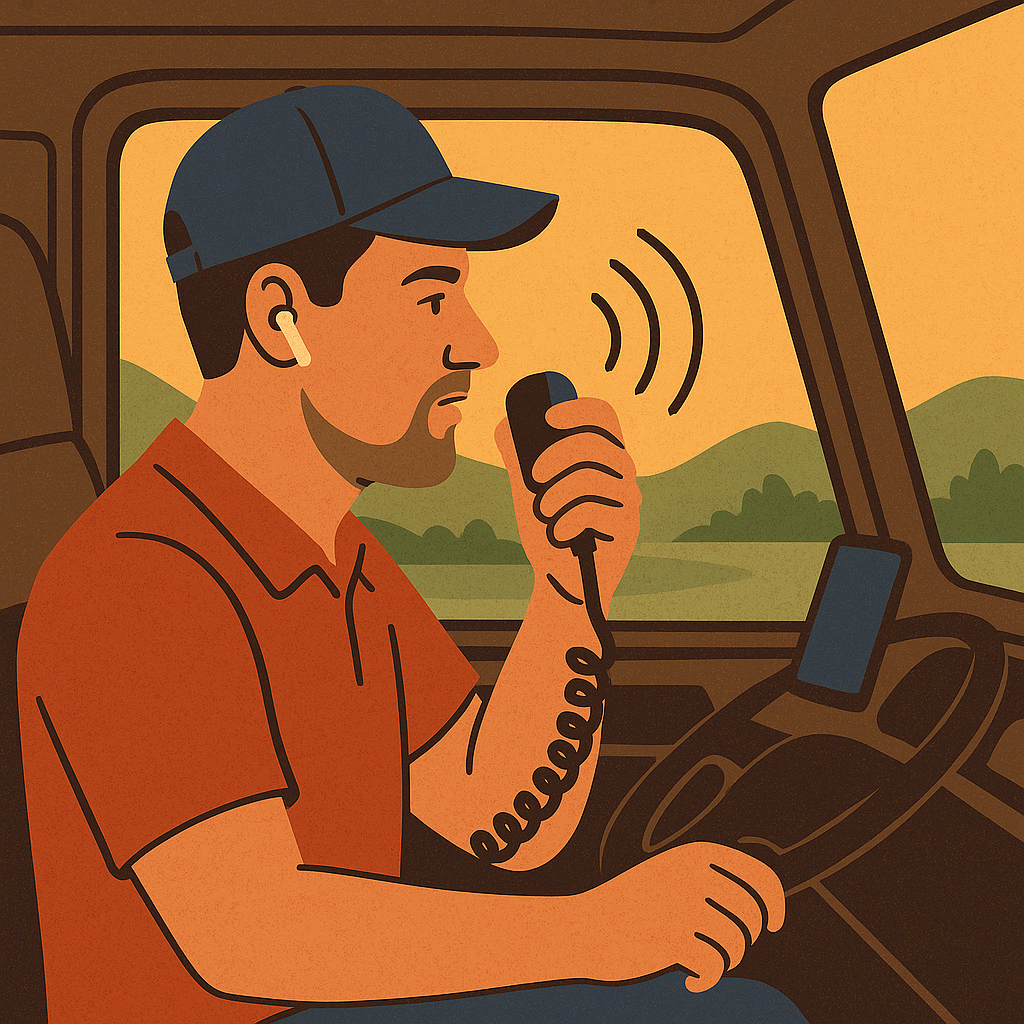
Even when we are surrounded by modern technologies such as smartphones, voice assistants and routing software in transportation, the authentic CB radio chatter still keeps going live because no device replicates true trucker communication.
- The high-tech devices usually defer to the actual situation by a few minutes.
- In some rural areas, even a driver may not have a signal on his cell phone. However, to get connected to the CB still works.
- The veterans may use this method of a trucker for the purposes of both networking and communication.
- Some phrases from the trucker lexicon have a particular rhythm that sounds solely human and cannot be imitated by an electronic device.
The use of the language of CB also weaves a driver into a traditional network full of mutual assistance where nobody is just a truck number anymore, but a single and essential body in a patchwork informal safety-net made by the shared words of the trucker, known to be used by drivers across the country as part of active trucker culture.
Common Trucker Slang and Its Deliveries
| Trucker Slang Term | Meaning |
| 10-4 | Affirmative / Clearing message |
| Breaker 1-9 | Request to speak on Channel 19 |
| Smokey / Bear | Highway patrol or law enforcement |
| Back Door | Traffic or vehicles behind your truck |
| Chicken Coop | Weigh station |
| Hammer Lane | Fast lane |
| Gator | Large tire debris on the road |
These expressions, widely shared as trucker slang phrases, became the unofficial dictionary drivers rely on during long stretches of night driving.
Trucker Lingo Guide | Be More Confident On the Road By Understanding Trucker Lingo Codes
Why Learning Early Gives You a Real Advantage
A number of the new drivers don’t appreciate how important the precious seconds of CB communication really can be. However, the effort to master the trucker jargon at the beginning yields quick dividends:
- You catch the news about wrecks or blocked lanes ahead of your dispatcher.
- You keep your clean slate of tickets because “Bear at the mile marker 64” was the prompter of someone up ahead.
- You find out which places suddenly receive weather drops or spots that are covered with patches of ice.
- You come to understand the traffic flow much earlier than you see it for yourself.
Thus, even rookies are encouraged to take their own little trucker slang guide, keep it updated by adding new terms they hear, and use it all the time. Gradually, understanding and using these trucker slang words will feel completely natural.
Useful CB Radio 10-Codes You’ll Hear Daily
| Code | Meaning |
| 10-1 | Bad signal / Can’t hear you |
| 10-8 | Ready and rolling again |
| 10-9 | Say that again |
| 10-20 | Share your current location |
| 10-36 | Asking for the time |
| 10-100 | Bathroom break |
These codes appear everywhere across the trucking world and help rookies understand the flow of trucker communication with ease.
When You Start “Thinking in CB”: A Sign of Real Progress
Each novice eventually reaches that pivotal stage when trucker slang terms go from being meaningless noise and become their second language. That is the moment:
- You will not even think about it, you just answer “10-4.”
- You hear somebody saying “Bear in the bushes” and you tap your brakes.
- You get to know the lines by the sound, the rhythm, or by the slang words.
- You go another route because someone tells you “parking lot ahead.”
This point marks the shift when trucker terms move from memorization to instinct.
Here Are Leftover Commands Every New Driver Should Study
These simple trucker slang phrases help rookies communicate smoothly:
- “Got your ears on?”
- “What’s your 20?”
- “Breaker 1-9, any smokeys up ahead?”
- “Keep the shiny side up.”
- “Moving parking lot at the 75.”
The Culture of the Trucker Lingo and Its Evolution
CB radio was truckers’ private social network long before dispatch systems. Drivers would cross lonely highways and share information, humor, warnings, and support. Over time, trucker culture shaped and refined the most intuitive trucker slang words, keeping the language alive even as technology advanced.
The speakers adopted phrases that resonated and shed those that were confusing.
This organic movement cultivated a rich culture sealed where drivers alone could be found.
Additional Trucker Terms Rookies Will Hear Eventually
- “Reefer” — refrigerated trailer
- “Motormouth” — someone who talks too much
- “Evel Knievel” — motorcycle rider splitting lanes
- “Comic book” — logbook
- “Gear jammer” — aggressive shifter
- “Parking lot with wheels” — overloaded slow truck
A complete trucker slang list helps rookies internalize these expressions quickly.
Cases When CB Talk Is More Effective Than Apps
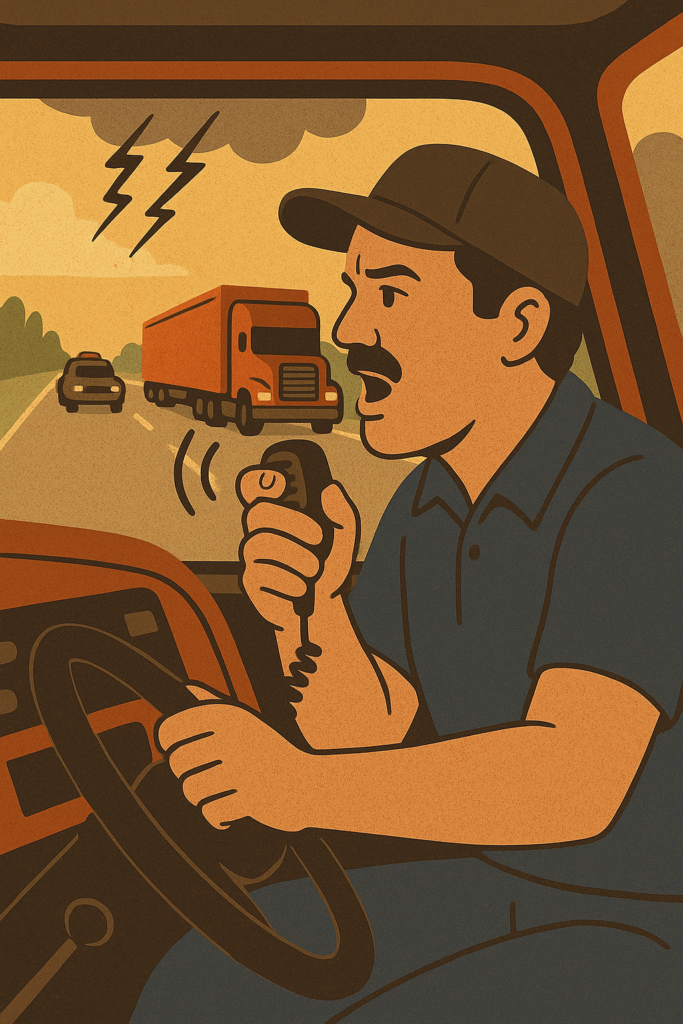
1. Road hazards appear fast
CB alerts drivers immediately.
2. Law enforcement presence
A single slang line avoids fines and confusion.
3. Weather changes
Drivers share real-time warnings much earlier than any app.
The General Aspect: How CB Lingo Facilitates Community Connection
Despite assumptions about trucking being lonely, CB talk creates a sense of belonging rooted in deep trucker culture. Communication through slang:
- eases long nights
- boosts rookie confidence
- prevents avoidable mistakes
- coordinates stops and parking
Through these trucker slang phrases, truckers connect without ever meeting face-to-face.
How to Learn CB Talk Without Feeling Overwhelmed
- Listen first
- Keep notes of new trucker terms
- Speak naturally
- Use short phrases
- Avoid tone misunderstandings
Tips on How to Keep From Sounding Like a Trucker Slang Dictionary
Experienced drivers use slang sparingly:
- when clarity improves
- when speed matters
- when universally understood
- when discussing hazards
Overusing trucker slang words makes speech sound forced, while balanced use keeps communication sharp.
Final Words: Trucker Slang Is Not Just Vocabulary — It’s a Skill
Understanding CB slang is not just memorizing a book of trucker slang terms or flipping through a trucker slang dictionary once. It is participating in a living form of trucker communication that keeps people informed, safe, and connected mile after mile.
When you understand trucker lingo meanings:
- the road becomes less unpredictable
- you avoid risks others miss
- you connect to the driver community instead of feeling alone in the cab
- you grow confident much faster than rookies who ignore CB culture
And one day, you realize you are the one giving warnings, sharing CB advice, and guiding others with a few well-chosen trucker slang words. That is the moment you fully join the trucking world — not just as someone who drives a truck, but as someone who speaks the language of the road.
FAQ: The Basics of Trucker Slang and CB Culture
1. Is it worth the effort that I learn trucker slang phrases, despite having GPS and apps?
Absolutely! No digital solution beats the speed of human voices on a CB. Trucker talk is immediate, specific, and based on actual conditions, not on a delayed data. Drivers inform each other about accidents, police, and dangers long before technology has the chance to update them. Applications render knowledge; CB provides a gut feeling.
2. What is the time required for me to learn most of the trucker terms?
Most beginners get them in a soft manner. You begin with the recognition of a few trucker slang commonly used, then the other day everything instantly “clicks.” Learning by immersion is in fact what you are doing – the more you hear, the quicker you understand. A slang dictionary is a helpful tool, yet the true understanding is achieved when one hears the music of the road.
3. Is talking on the CB about trucker culture or just being outdated?
Absolutely is an integral part of the culture. The CB is a safety device, social communication, and a custom that has been inherited for centuries. Even in the digital age, the drivers use the CB language as a link between them and others, who currently share the same road.
4. What if I feel silly because I tend to fumble with CB lingo in the beginning?
Every old-timer was once a greenhorn. Begin with the simplest: simple trucker slang phrases like “10-4,” “What’s your 20?,” or “Got your ears on?” Day one doesn’t need you to speak like a dictionary of trucker slang. Be yourself, be respectful, and you will be with the group in a shorter time than you expect.
5. In what situations do drivers tend to use CB radio over cellular coverage?
It is because CB is of its own frequency, and is independent from the wires. It is indeed the primary source of truckers’ communication during storms, traffic congestion, or deserted roads. Many drivers believe that one single word in the right jargon can cut off the time delay or avert a major accident — no software can match this.
6. What should I do not to sound like I’m trying to push CB jargon into every sentence?
Use trucker slang words only if that is the only way to make the message shorter or clearer; this is the key. The truckers who have been around for a while do not have to use a lot of different trucker terms- what they do is they choose only the expressions that make it easier for others to understand. It’s like using CB talk with seasoning: you just need to add a little to make it work, too much just confuses. After some time you will learn the normal pattern of speaking in the road without having to copy anyone.